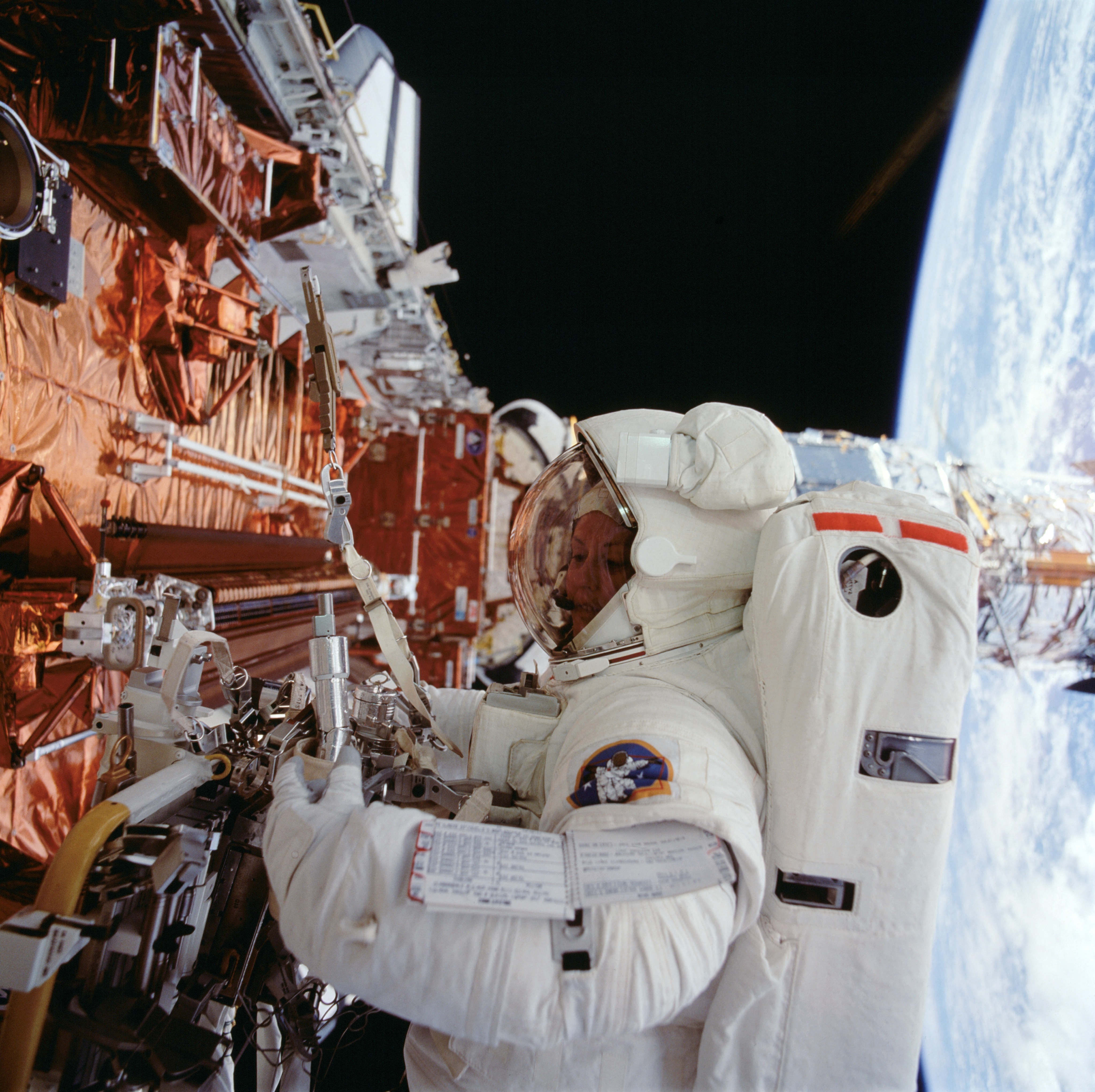
Astronaut Kathryn C. Thornton works with equipment associated with servicing chores on the Hubble Space Telescope during the fourth spacewalk on the eleven-day mission. via NASA https://ift.tt/0chvgnG
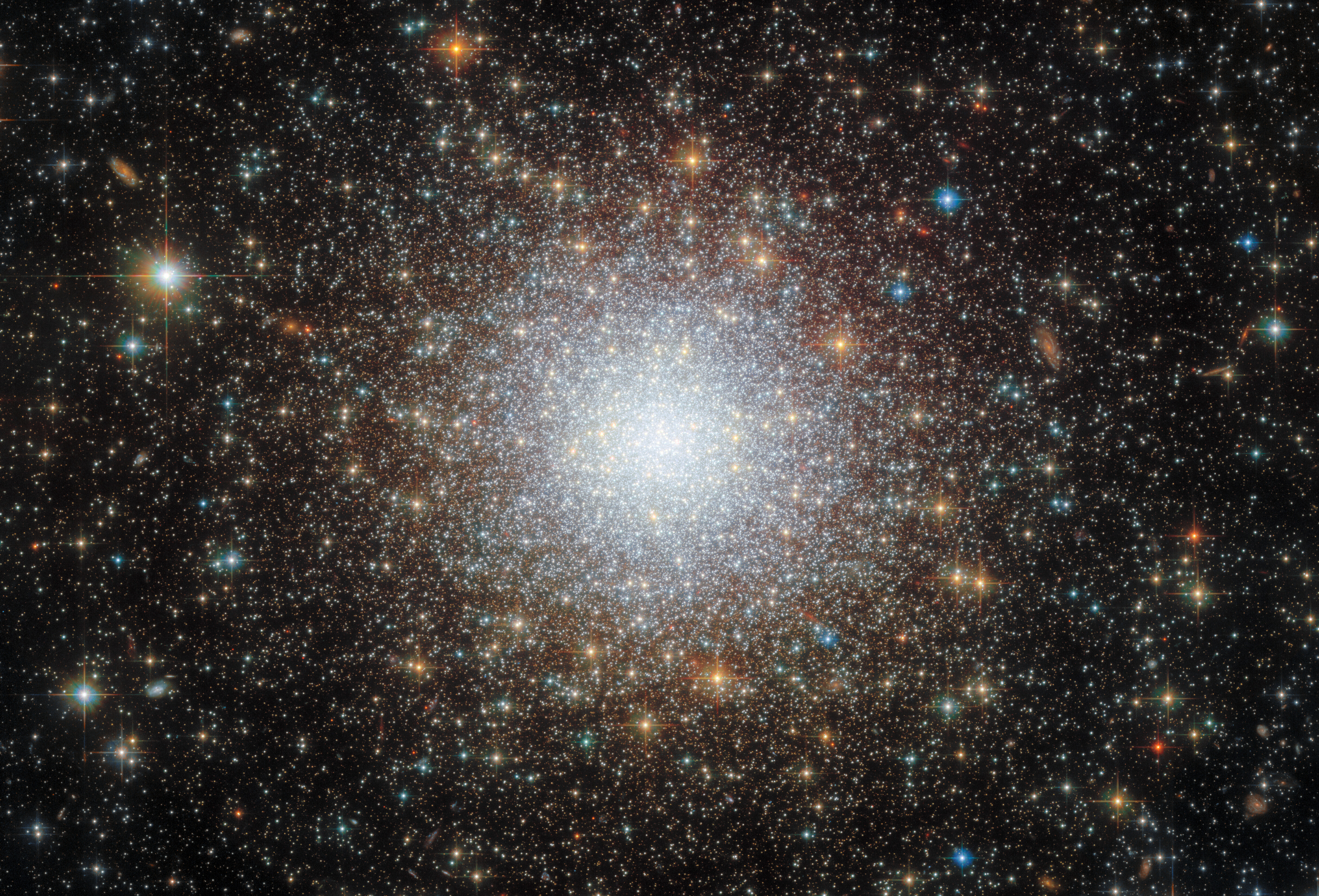
This striking image shows the densely packed globular cluster known as NGC 2210, which is situated in the Large Magellanic Cloud (LMC). The LMC lies about 157 000 light-years from Earth, and is a so-called satellite galaxy of the Milky Way, meaning that the two galaxies are gravitationally bound. Globular clusters are very stable, tightly bound clusters of thousands or even millions of stars. Their stability means that they can last a long time, and therefore globular clusters are often studied in order to investigate potentially very old stellar populations. via NASA https://ift.tt/jQtf95M
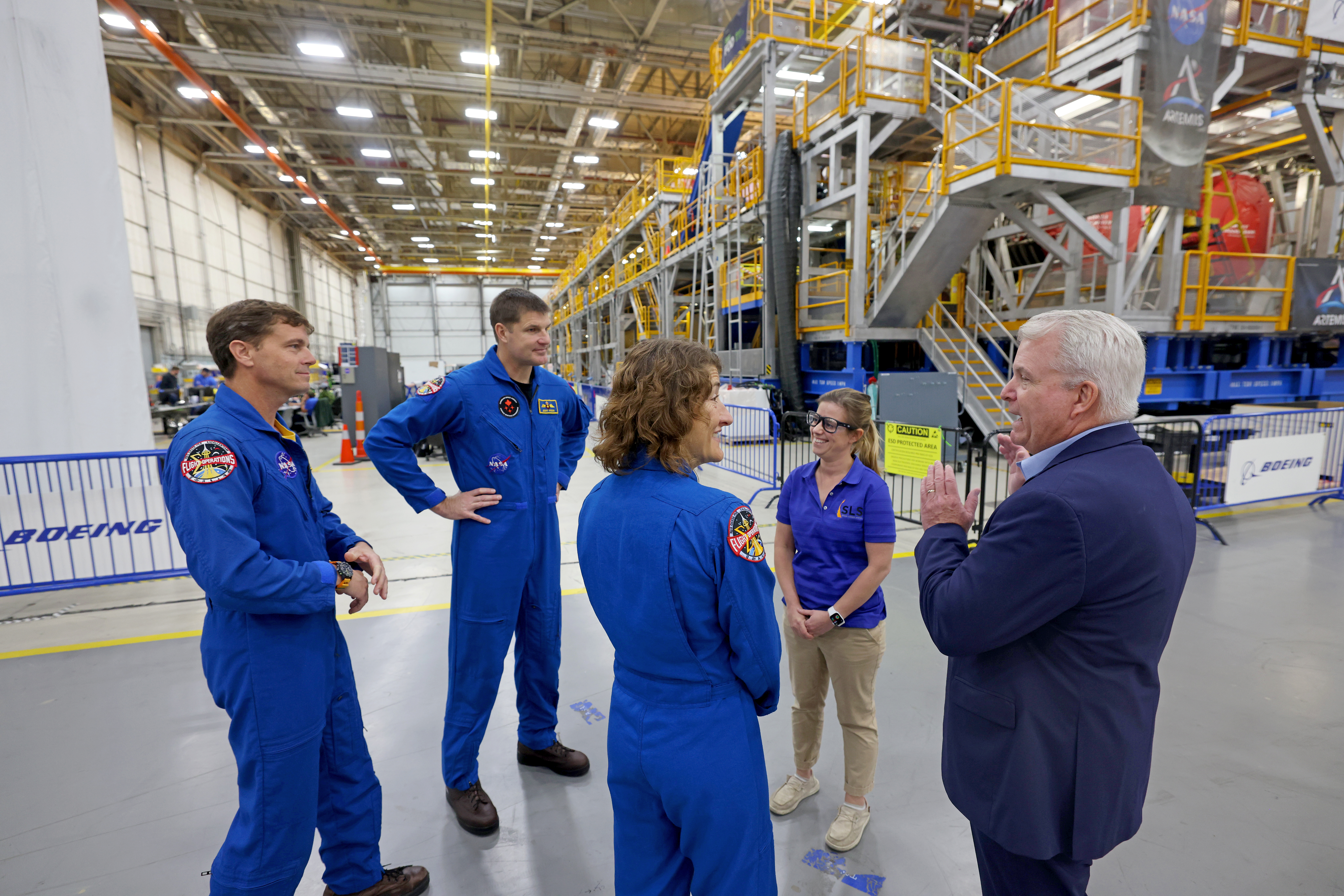
Artemis II NASA astronauts Reid Wiseman (left) and Christina Koch (middle) of NASA and CSA (Canadian Space Agency) astronaut Jeremy Hansen (second from left) view the core stage for the Space Launch System rocket at the agency’s Michoud Assembly Facility in New Orleans on Nov. 16. The three astronauts, along with NASA’s Victor Glover, will launch atop the rocket stage to venture around the Moon on Artemis II, the first crewed flight for Artemis. via NASA https://ift.tt/JoG4Ivh
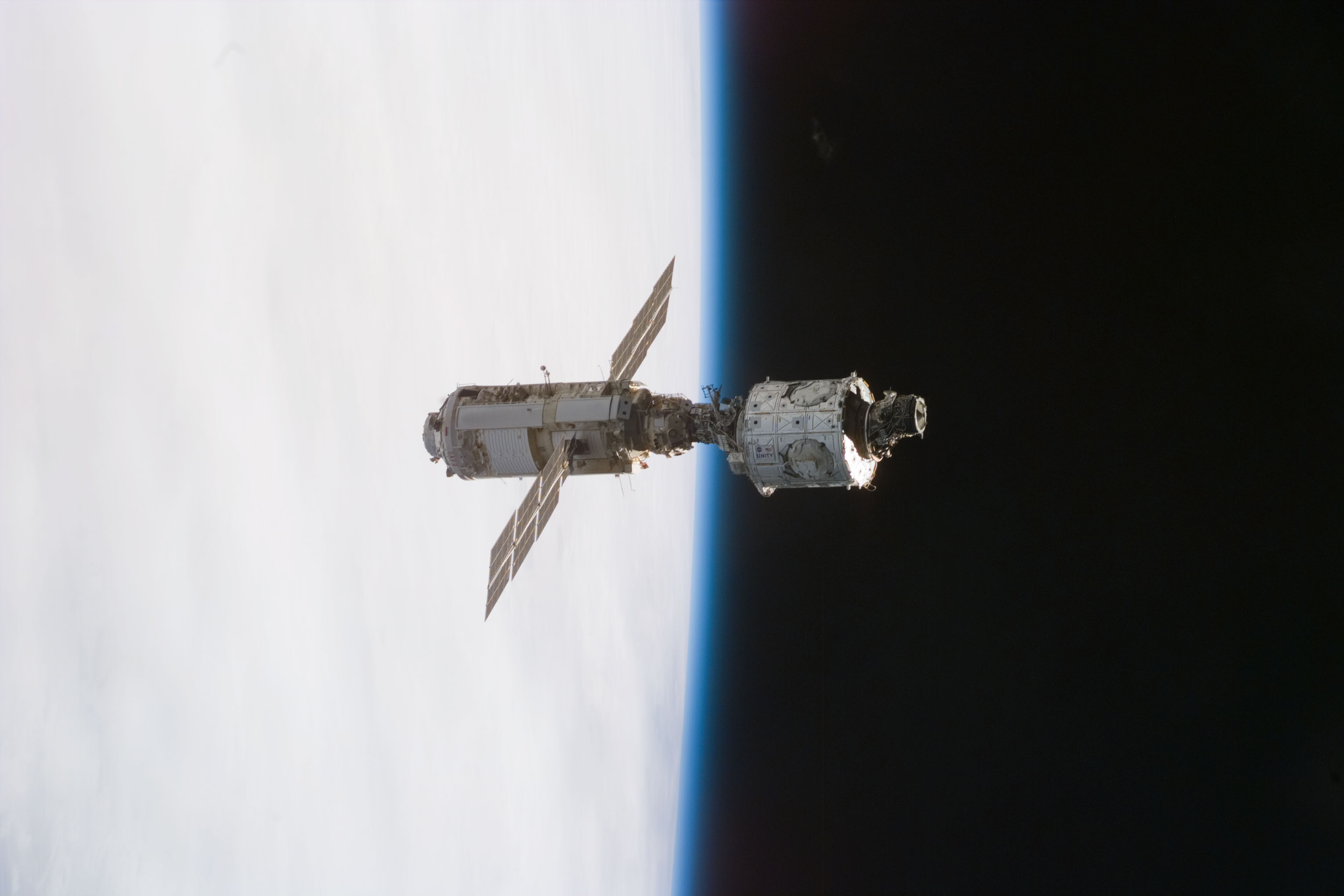
The mated Russian-built Zarya (left) and U.S.-built Unity modules are backdropped against the blackness of space and Earth's horizon shortly after leaving Endeavour's cargo bay. The photo was taken with an electronic still camera at 21:20:21 GMT, Dec. 13. via NASA https://ift.tt/r3uENhH
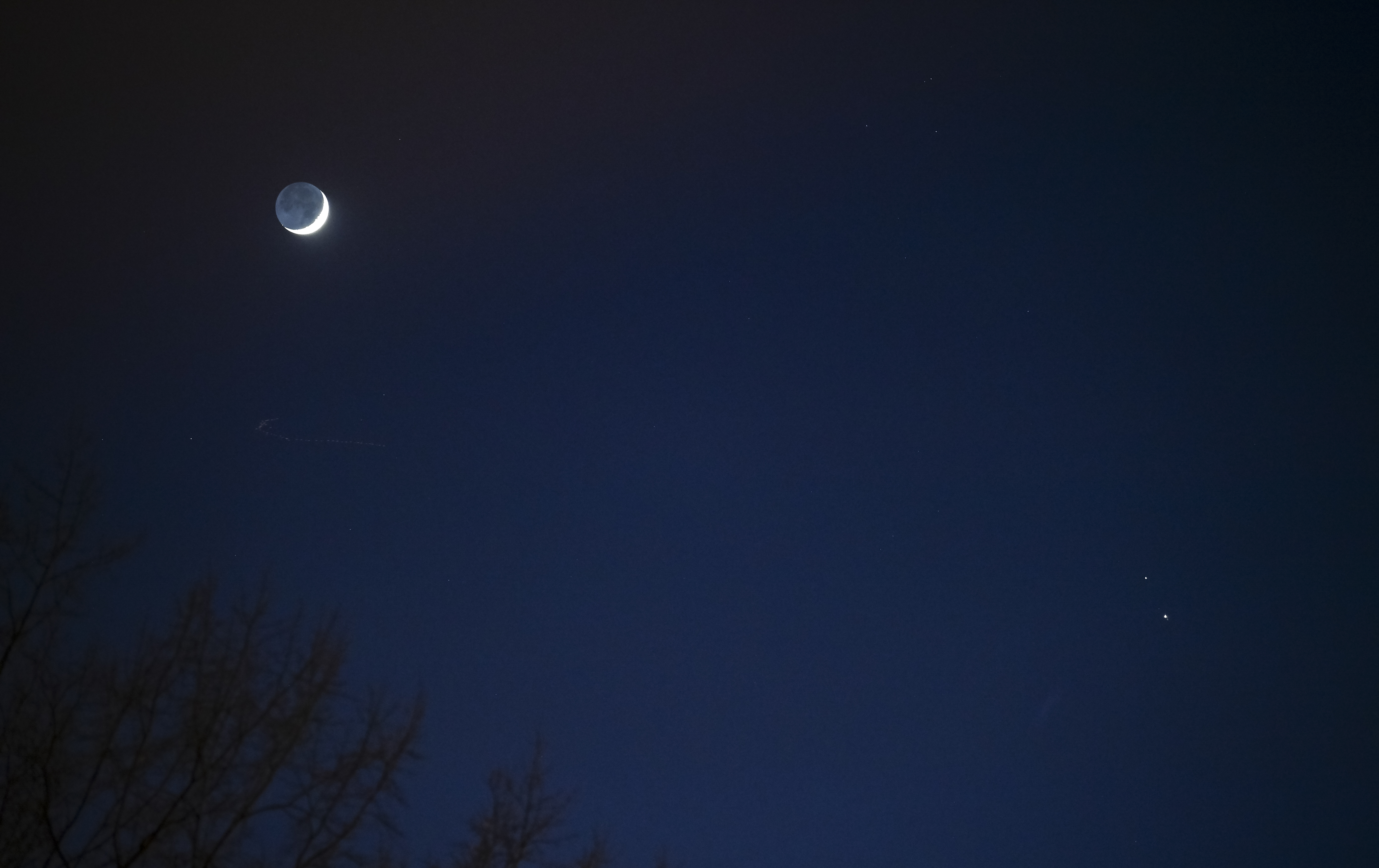
The Moon, left, Saturn, upper right, and Jupiter, lower right, are seen after sunset from Washington, DC, Thurs. Dec. 17, 2020. The two planets drew closer to each other in the sky as they headed towards a “great conjunction” on Dec. 21, where the two giant planets appeared a tenth of a degree apart. via NASA https://ift.tt/jABR1l9
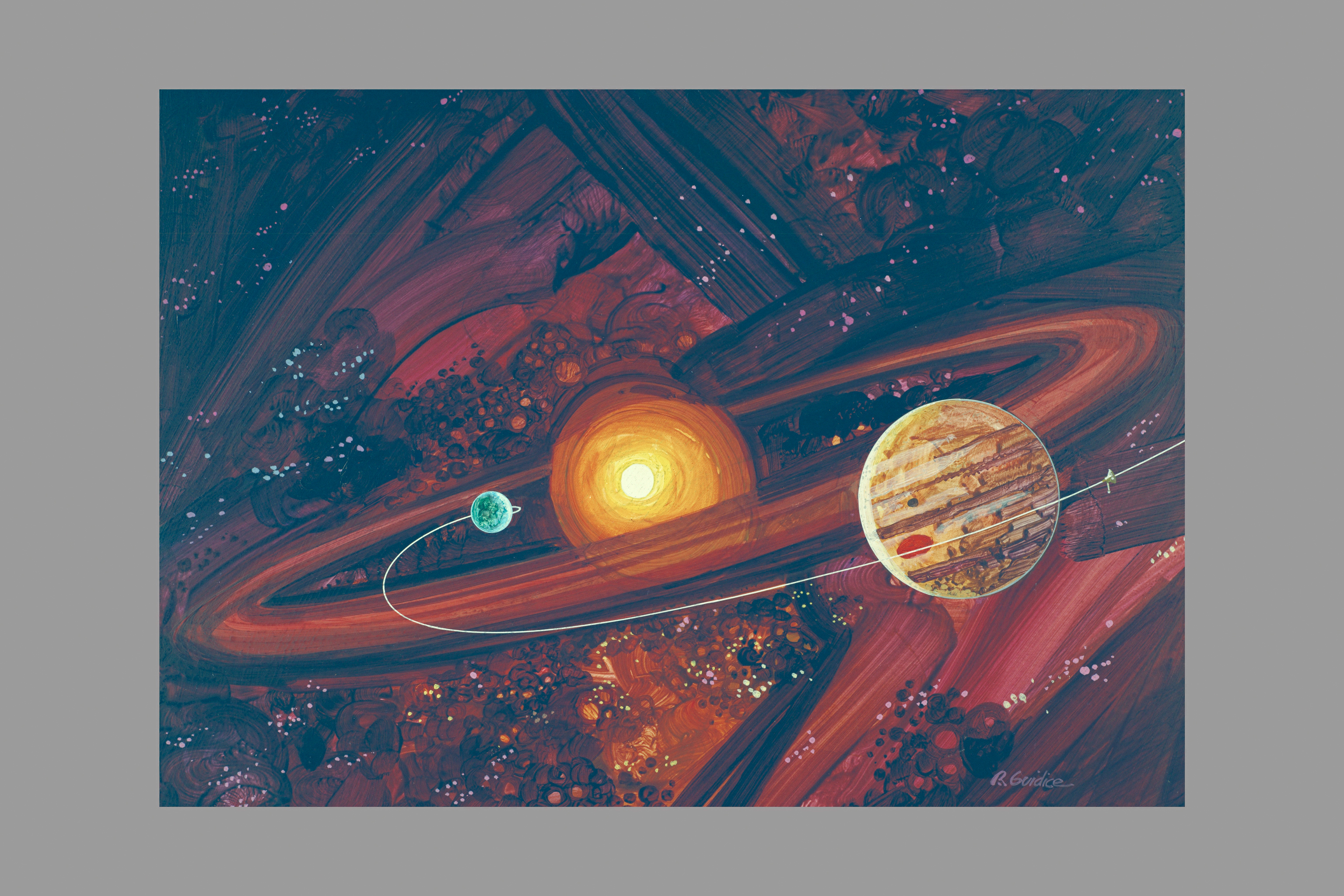
If spacecraft are to visit the outer solar system, they must cross the asteroid belt between Mars and Jupiter. The Pioneer mission was faced with the question of just how dangerous this asteroid belt would be to a spacecraft passing through it. via NASA https://ift.tt/CMZqEuL
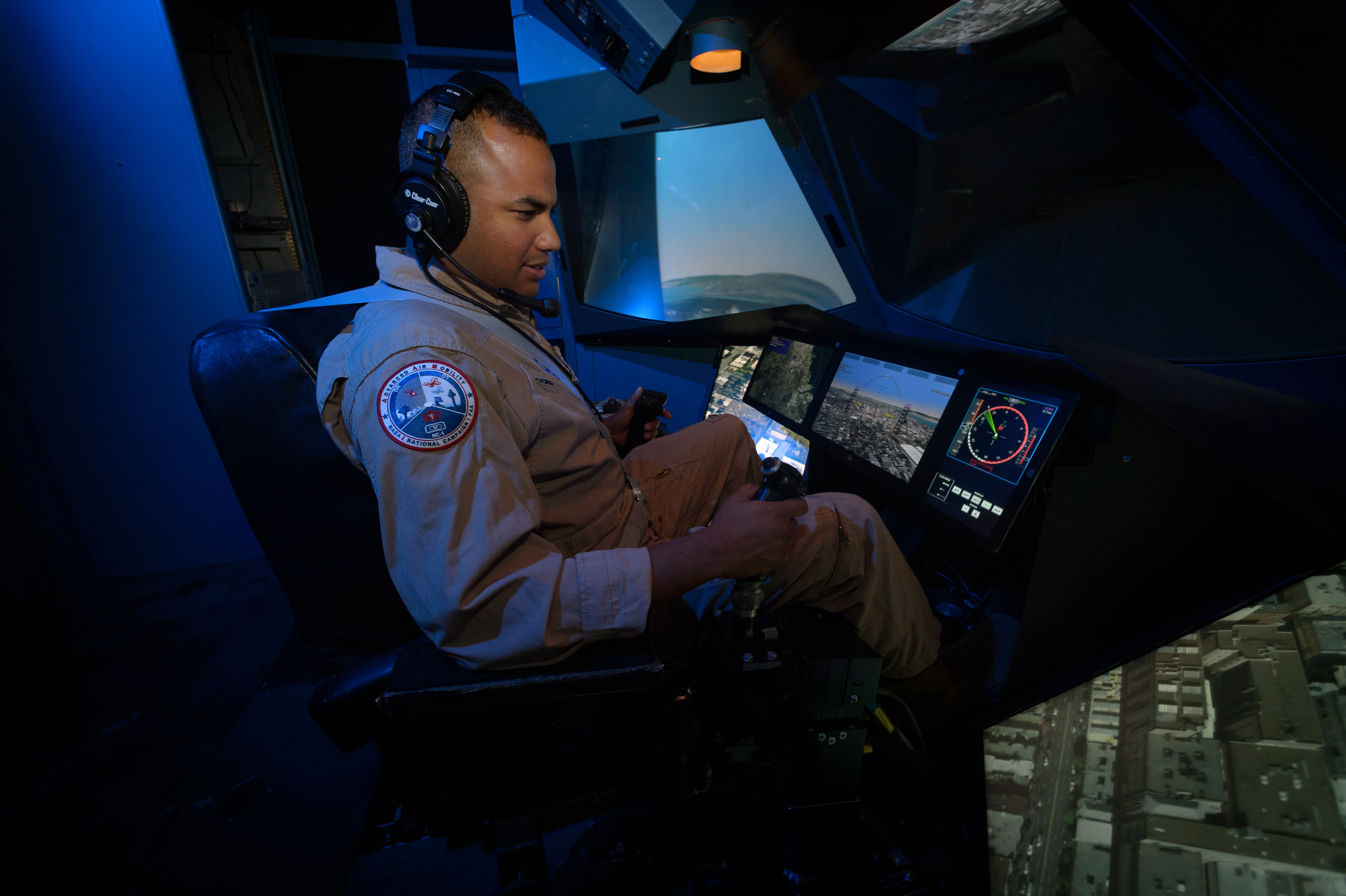
"Everyone needs an anchor from their community to motivate and inspire them to move forward. I want to be a motivational anchor for the next generation of minorities." – David Zahn, NASA Research Pilot, Ames Research Center via NASA https://ift.tt/uFfQXE0